AI
General
A Tale of Two Horrors: The Failure You See and The Future You Don't
Oct 30, 2025
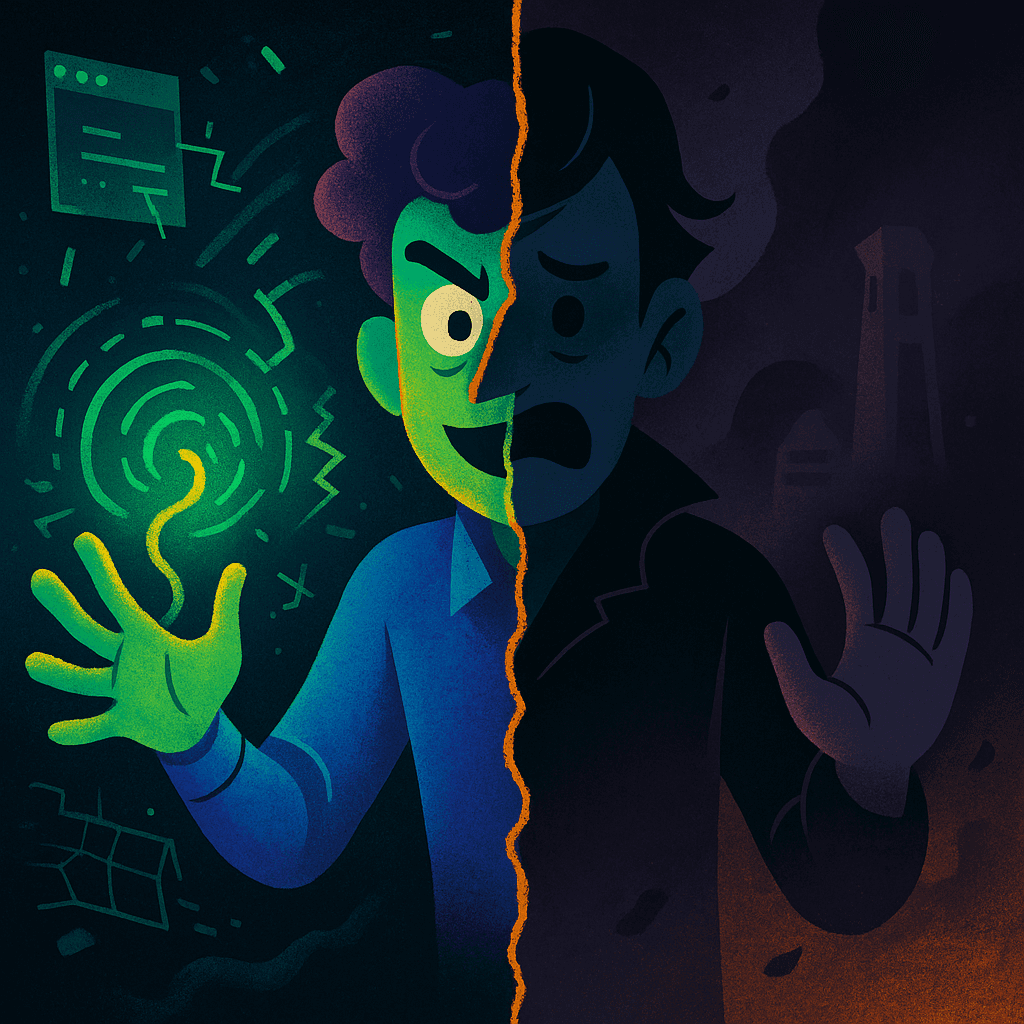
Happy Halloween! As we brace for ghouls and goblins, the AI revolution presents two critical, opposing challenges. The first is a micro nightmare: the immediate, tangible danger of AI-assisted code creating catastrophic failures in production. The second is a macro threat: the existential dread of over-regulating out of fear and losing a global strategic race.
1. The Failure You See
"Vibe coding" is revolutionary. It makes development accessible and incredibly fast. The developer's high is now about building a functional prototype in an afternoon, not a week.
But this speed creates a critical, hidden risk: the "prototype-to-production gap." The code works perfectly locally, but it is a brittle, insecure house of cards.
A recent, high-profile example is the Tea app. The app, which promised a secure, women-only social network, was found to have exposed its entire user database. The vulnerability wasn't a complex, nation-state-level exploit; it was a fundamental, classic security flaw: client-side authentication.
This is the vibe coding nightmare. An AI, asked to "create a login system," will generate the easiest functional example, which is often a client-side check. A developer in a vibe accepts it because it works locally. But functional is not secure. This is the "it works on my machine" problem evolved into a catastrophic, company-ending data breach.
The Path Forward: From Vibe Coding to Vibe Building:
Have a Plan Before You Prompt: Vibe coding is jumping in with a vague idea. Vibe building starts with a plan. Before you ask an AI to write a single line of code, you must define what you are building and what that entails. This means identifying critical components, like "This will need a secure, server-side user authentication system." This plan becomes the blueprint you use to guide the AI, rather than letting the AI guide you.
Know Why It Matters: This is the core shift. Vibe building is applying your fundamental knowledge to the process. The AI is the dough, but you are the baker. The AI provides the raw, powerful material, but you are the one who provides the plan, the skill, and the structure. This fundamental knowledge of why things are done, why auth matters, why CI/CD pipelines are non-negotiable is what separates a builder from a prompter.
Master Context Engineering: This is the technical skill that connects your plan and your knowledge. "Context engineering" is the art and science of filling the AI's "context window" (its working memory) with the right information. Instead of a vibe prompt like create a login page, a vibe builder uses context engineering: Using our server-side auth patterns, create an endpoint that validates a user with bcrypt. Here is our API style guide and our standard error handling file. You are engineering the context to ensure the AI's output is secure, correct, and fits your plan from the start.
2. The Future You Don't
This brings us to the second, quieter, and far more profound horror. The public conversation is obsessed with the "AI overlords" of Skynet, automation bias, and existential threats. These fears, compounded by real-world failures like the Tea app drive us toward a "freeze" response: moratoriums, heavy-handed regulation, and a cultural fear of innovation.
But the strategic risk is the opposite: the slow, creeping irrelevance that comes from choosing to "secure ourselves out of AI." This is a strategic miscalculation. We are focused on building one perfect, complex, do-everything thing (a flawless, safe AGI), while our adversaries are focused on building thousands of simple, 'do-one-thing' tools (industrial robots, logistics AI, scientific discovery platforms).
The truly terrifying scenario is that we "win" our self-defined race. We unveil our perfect, safe, do-everything model in 2040... only to find our competitors' do-one-thing tools have already automated their manufacturing, secured their supply chains, and revolutionized their economies. We'll have built the world's most impressive "relic" while they built the future.
The Path Forward: The future belongs to those who can navigate the narrow path between paranoid stagnation and reckless acceleration.
Develop an "Integrator" Workforce: The most valuable workers of the future won't be just "specialists" or "generalists." They will be "Integrators" people who can plan, manage, and bridge the gap between human creative intent and machine execution.
Prioritize Augmentation, Not Just Autonomy: The goal isn't to build a fully autonomous AI Doctor. The goal is to build an AI assistant that makes a human doctor 100x better. This approach keeps the "invaluable human element" in control, mitigating risk while reaping the rewards.
This Halloween, the most terrifying monsters aren't the ghouls, but the ones we're either building by accident or ignoring out of fear. The ultimate trick is to avoid both: we must build with discipline to banish the failures we see, and build with courage to escape the future we don't.